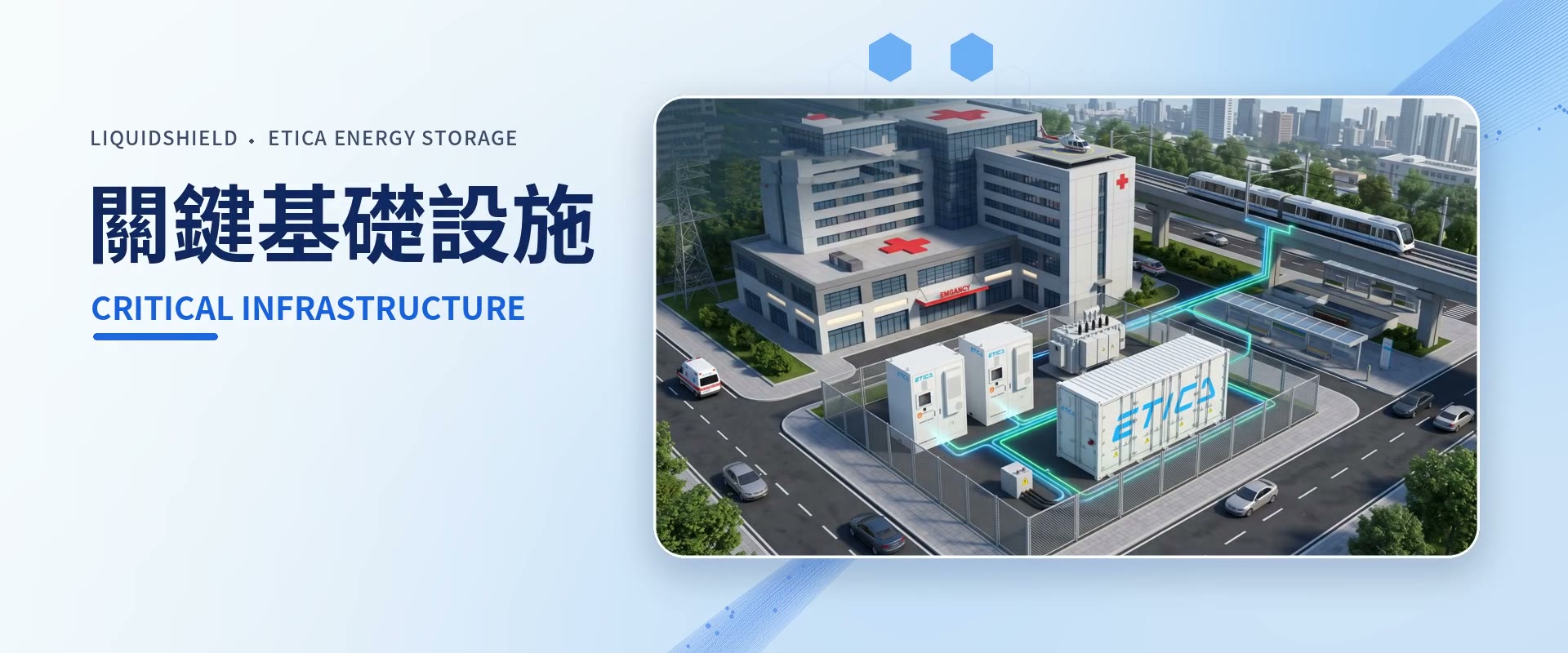
Zero tolerance for outages
Surgical, emergency, and monitoring equipment cannot be interrupted, and transfer time is measured in milliseconds.
CHALLENGES
Surgical, emergency, and monitoring equipment cannot be interrupted, and transfer time is measured in milliseconds.
Equipment is close to people and patient rooms, so fire-safety review and insurance conditions are the threshold for adoption.
Measurable, disclosable data is needed to align with international reporting frameworks.
Existing UPS units and diesel generators must be able to connect, so that on-site equipment keeps its role.
TWO-LAYER PROTECTION
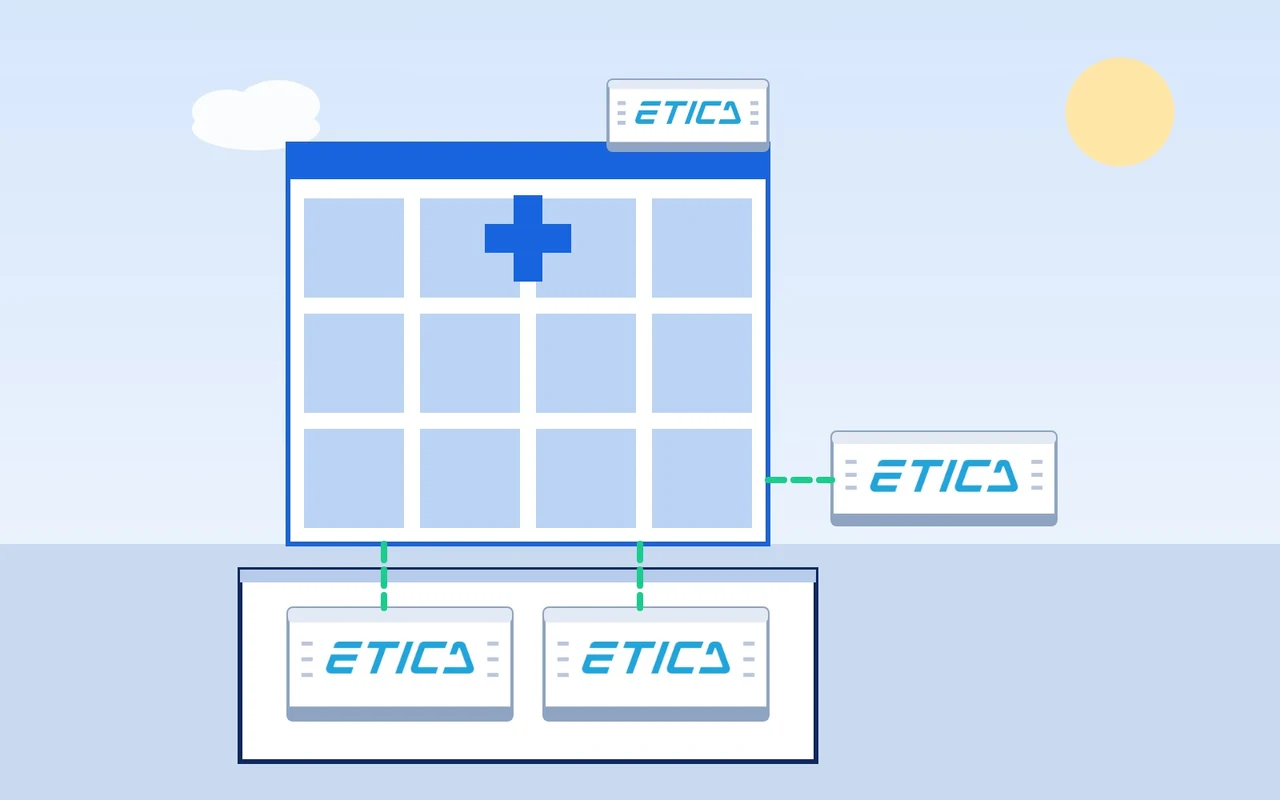
The moment grid power fails, the UPS takes over within milliseconds. The energy storage system then starts and supports the load for several hours, and a diesel generator can be connected if needed.
Detect anomalies and initiate switchover.
Takes over in about 2 milliseconds and keeps the load running.
Continue supplying power for several hours.
Bridging the gap during extended outages.
Transfer time and hours of supply are assessed from the site load and the actual configuration.
LIQUIDSHIELD

Patented full-immersion cooling uses Shell coolant to keep cell temperature even and to keep out oxygen. Since 2019 it has used an anti-propagation design to suppress thermal runaway and lower risk.
COMPARISON
| Comparison Items | Conventional UPS+diesel generator | Air-cooled lithium-ion energy storage | ETICA Full-Immersion Cooling |
|---|---|---|---|
| Switch | UPS responds in milliseconds; a generator needs time to start | Depends on the system | Two-tier connection of UPS and energy storage |
| Safety | Fuel storage and exhaust | Higher thermal-runaway risk | Immersion cooling and propagation-prevention design |
| Noise and Emissions | Generator noise and emissions | Fan Noise | Low noise, with no operating emissions |
| Everyday Value | Backup Only | Peak Shaving Capable | Peak shaving, carbon monitoring, and grid support |
APPLICATIONS

ESG
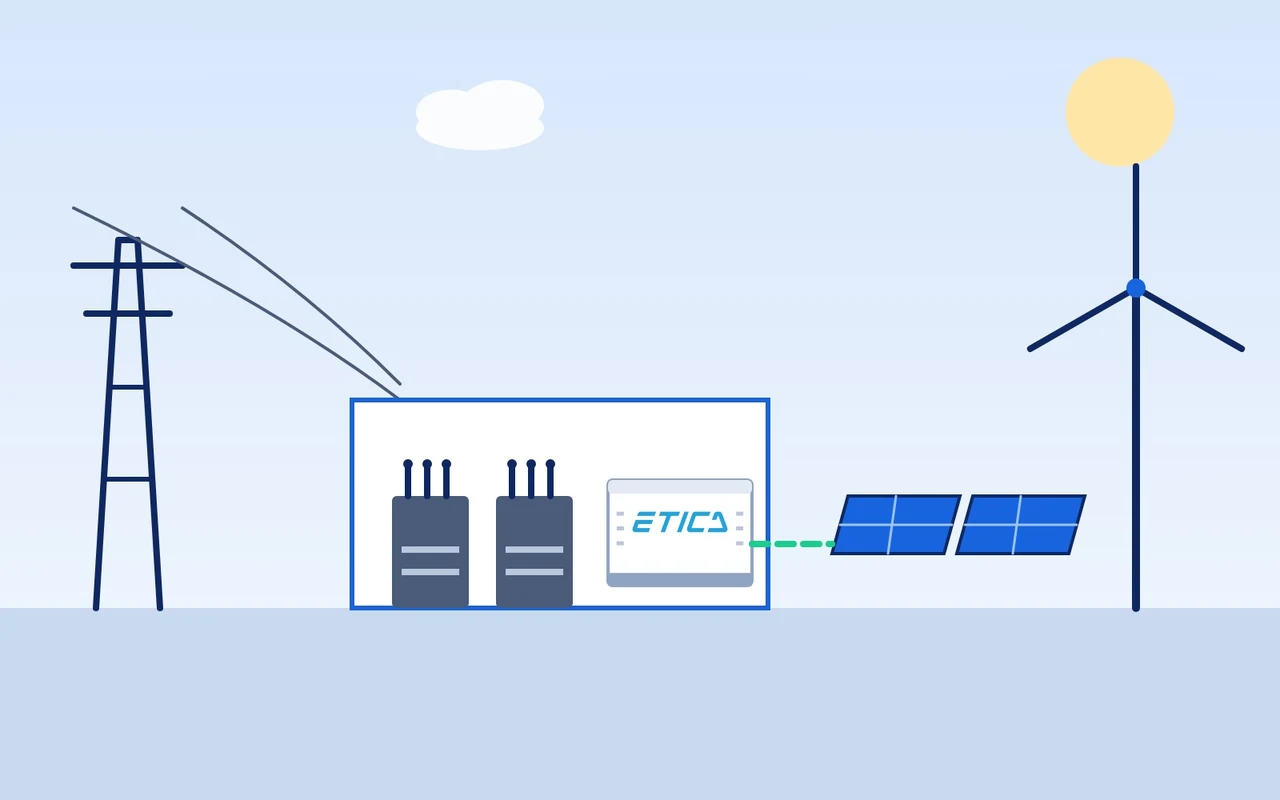
Charges off-peak and discharges at peak, together with renewable energy, to lower carbon emissions from electricity use.
Records electricity use and energy storage data in real time, as a basis for the carbon inventory.
Aligns with frameworks such as ISO 14064, GRI, TCFD, and SASB to support sustainability reporting.
Tell us about the site and how electricity is used, and we will help assess the most suitable capacity and configuration.